

 English
 Español
 Deutsch
 Français
 Italiano
 Português
 Русский
 Polski
 Türkçe
 Čeština
 Magyar
 Slovenščina
 Nederlands
 Suomi
Suomi
 Română
 Ελληνικά
 Srpski
 中文
中文
 日本語
日本語
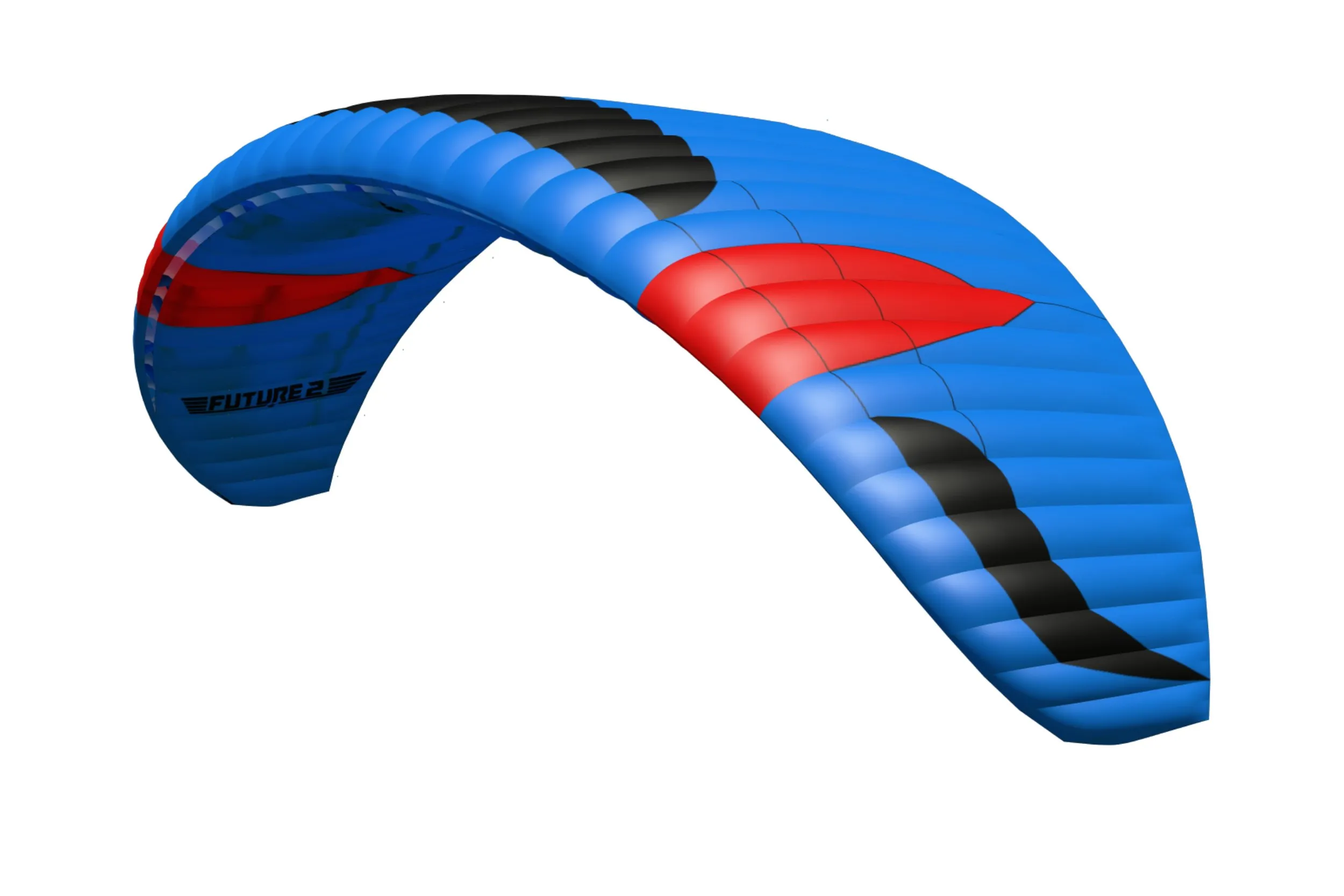
소개 Flow Future 2
www.flowparagliders.com.auFuture 2: The Evolution
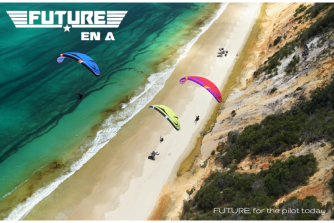
The Future 2 is our beginner-friendly EN-A, designed to deliver the perfect blend of passive safety, ease of use and performance for aspiring pilots.
Rather than completely redesigning an already successful wing, we focused on thoughtful refinements and incremental improvements that enhance the flying experience while preserving everything pilots loved about the original Future.
A key advancement is the introduction of a refined shark-nose profile, which improves internal pressure retention across a wider range of angles of attack. The result is increased collapse resistance, greater pitch stability, and exceptionally high levels of passive safety, providing pilots with confidence and reassurance throughout every phase of flight.
Combined with a lighter canopy, redesigned risers, premium Liros TSL line technology, and carefully optimised materials, the Future 2 is easier to launch, more durable, and even more enjoyable to fly.
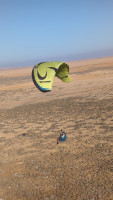
While first and foremost a safe and confidence-inspiring training wing, the Future 2 offers performance that extends well beyond the school environment. The Future is a wing that has already proven itself capable of flights exceeding 200 km, demonstrating that it is not simply a wing for learning but a wing that can continue to accompany pilots long after graduation as they develop their skills and explore new horizons.
The Future is yours.
SPECIFICATIONS
TECH TALK
Future 2: The Evolution
The Future 2 is our beginner-friendly EN-A paraglider, designed to deliver the perfect blend of passive safety, ease of use, and performance for aspiring pilots.
Rather than completely redesigning an already successful wing, we focused on making thoughtful refinements and incremental improvements to enhance the flying experience while preserving everything pilots loved about the original Future.
Easier Launches, Better Handling
One of the most noticeable upgrades is the lighter canopy construction. By carefully optimising the materials, we have reduced overall weight, making inflation and launching easier and more intuitive. The lighter canopy also improves all phases of flight, resulting in a wing that feels more responsive and enjoyable to fly.
Subtle updates to the trim and brake geometry have further refined the handling, delivering improved feedback, enhanced passive safety, and a more balanced feel in the air.
New Riser Design
The Future 2 features redesigned risers with improved ergonomics and clearer colour coding. These changes make the wing more user-friendly for students while simplifying instruction for schools and instructors.
The result is a cleaner, more intuitive system that helps pilots develop good habits from day one.
Premium Liros TSL Line Set
We have upgraded the line set to premium Liros TSL lines, replacing the previous Dyneema lines.
The benefits are significant:
- Improved dimensional stability for longer-lasting factory trim
- Reduced need for trim corrections and line checks
- Softer handling and easier ground preparation
- Reduced tendency for tangles during layout and inflation
- Increased abrasion resistance and durability
These improvements contribute to lower maintenance requirements and greater long-term reliability.
Optimised Materials
The Future 2 continues to use premium Porcher Skytex 38 in high-wear areas such as the leading edge and front upper surface, ensuring excellent durability where it matters most.
To reduce weight without compromising longevity, we have introduced MJ32 fabric on the undersurface and rear section of the upper surface. In addition to being lighter, MJ32 packs down to a smaller volume, making transport and storage easier.
Performance Beyond School
While the Future 2 is first and foremost a safe and confidence-inspiring training wing, its performance extends well beyond the school environment.
The Future platform has already proven itself capable of flights exceeding 200 km, demonstrating that this is not simply a wing for learning. It is a wing that can continue to accompany pilots long after graduation, allowing them to explore cross-country flying and develop their skills with confidence.
The Future is yours.
The Future 2 represents the next step in the evolution of our EN-A platform. Through a series of carefully considered refinements, we have made the wing lighter, easier to launch, durable and even more enjoyable to fly.
For students, instructors, and newly qualified pilots alike, the Future 2 delivers exactly what its name suggests: a safe, exciting, and rewarding pathway into the future of paragliding.
MATERIALS
OPTIMIZED MATERIAL SELECTION
Every material used in the Future 2 has been carefully selected to achieve the ideal balance between durability, sail tension, and lightweight performance.
The strategic combination of proven fabrics ensures a canopy that remains taut and dimensionally stable throughout its lifespan, while maintaining excellent launch characteristics and long-term durability.
Materials:
- Porcher Skytex 38g – Leading Edge
- MJ32 – Upper Surface
- MJ32 – Lower Surface
- Porcher Skytex Hard Finish – Internal Diagonals and Profiles
TRUE 3-LINE LAYOUT
TRUE 3-LINE LAYOUT
The Future 2 features a true 3-line architecture, reducing parasitic drag.
By simplifying the line structure, the wing benefits from increased aerodynamic efficiency, enhanced canopy solidity, and more direct handling characteristics. The reduced drag directly contributes directly to better glide and performance.
Benefits:
- Improved glide performance
- Increased canopy solidity
- Higher aerodynamic efficiency
- Easier and more predictable inflation
- More compact and responsive handling
SHARK NOSE AIRFOIL
SHARK NOSE AIRFOIL
The Future 2 introduces our latest-generation Shark Nose airfoil. Refined to deliver not only improved performance and comfort, but also enhanced passive safety.
The new profile incorporates a subtle reflex characteristic that improves canopy stability during inflation, making launches easier and more intuitive in all conditions. Whether performing a calm forward launch or a stronger wind reverse launch, the Future 2 rises smoothly and progressively overhead with incredible pitch stability, increasing launch success and reducing pilot workload.
In flight, the Shark Nose profile maintains higher internal pressure across a wider range of angles of attack, resulting in greater resistance to collapses while still providing clear and reassuring feedback through the risers. The wing communicates air movements effectively without feeling nervous or demanding, helping pilots build confidence as their skills progress.
Should a collapse occur, the increased internal pressure and optimised profile geometry promote rapid reinflation, contributing to a safer and more forgiving flying experience.
The new Shark Nose airfoil is one of the key technologies behind the Future 2, helping make it the safest and most confidence-inspiring wing we have ever produced.
OPTIMIZED INTERNAL STRUCTURE
OPTIMIZED INTERNAL STRUCTURE
Every cell and internal diagonal has been engineered and analysed using advanced computer simulations to achieve the ideal chordwise and spanwise sail tension distribution.The result is a cleaner, more efficient internal structure with fewer attachment points, creating a canopy that is both taut and rigid while retaining the precise amount of flexibility required to deliver clear and intuitive pilot feedback.
A well-tensioned sail is particularly important in thermic and turbulent conditions, where it enhances canopy solidity, improves aerodynamic efficiency, and increases resistance to collapses. The outcome is a wing that feels more stable, reassuring, and confidence-inspiring throughout the entire flight envelope.
RISERS AND TIP STEERING
RISERS AND TIP STEERING
The Future 2 features a completely redesigned riser system that is cleaner, more streamlined, and easier to use than ever before. While the new risers offer improved ergonomics and reduced clutter, the biggest advancement is their enhanced user-friendliness.Every riser is clearly colour-coded and marked, making it easy for pilots and instructors to quickly identify the A, B, and C risers. The dedicated big-ears risers are distinguished by a lowercase “a” rather than the capital “A” used for the main A-risers, eliminating confusion during launch preparation and flight.
This intuitive layout simplifies ground handling, launch procedures, and in-flight operations, allowing pilots to spend less time worrying about controls and more time focusing on flying. For students and instructors alike, the new riser design makes learning, teaching, and progressing safer, easier, and more enjoyable.